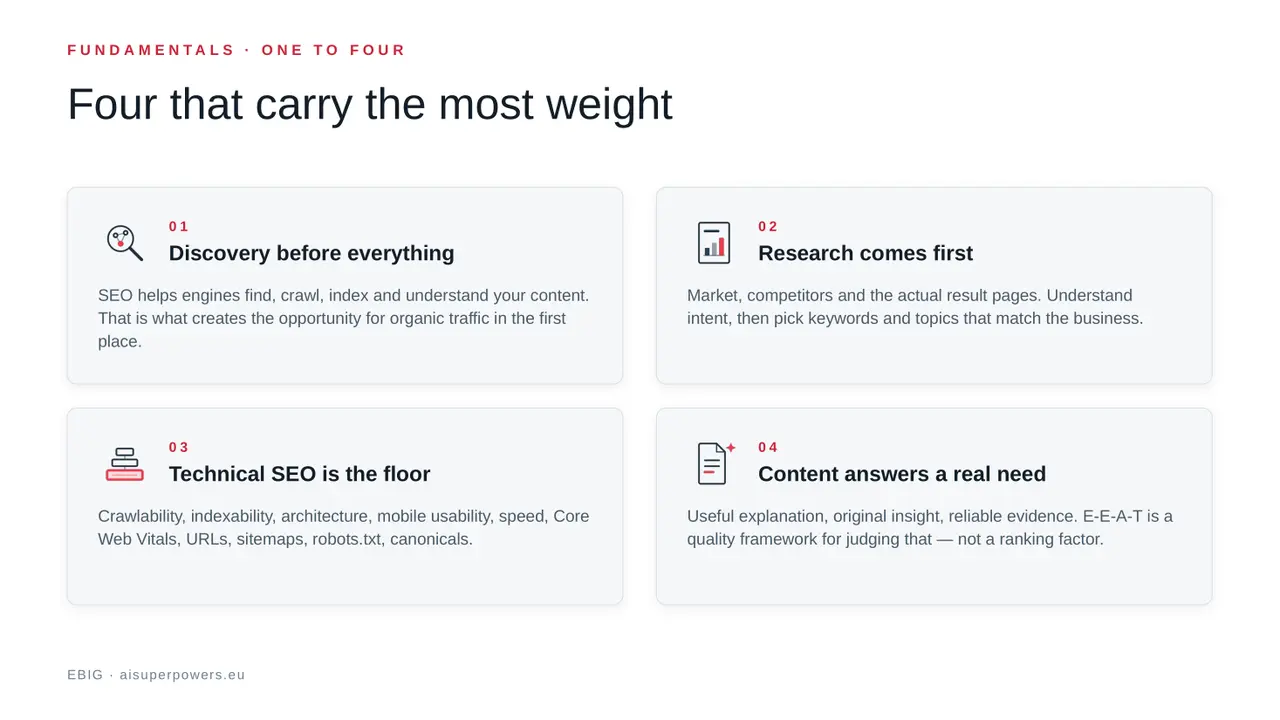
 01Discovery before everything
SEO helps engines find, crawl, index and understand your content. That is what creates the opportunity for relevant organic traffic.
What the work actually is in 2026 — the fundamentals that hold, the ten moves that matter, and what AI search really asks of you. Every number has a source next to it.
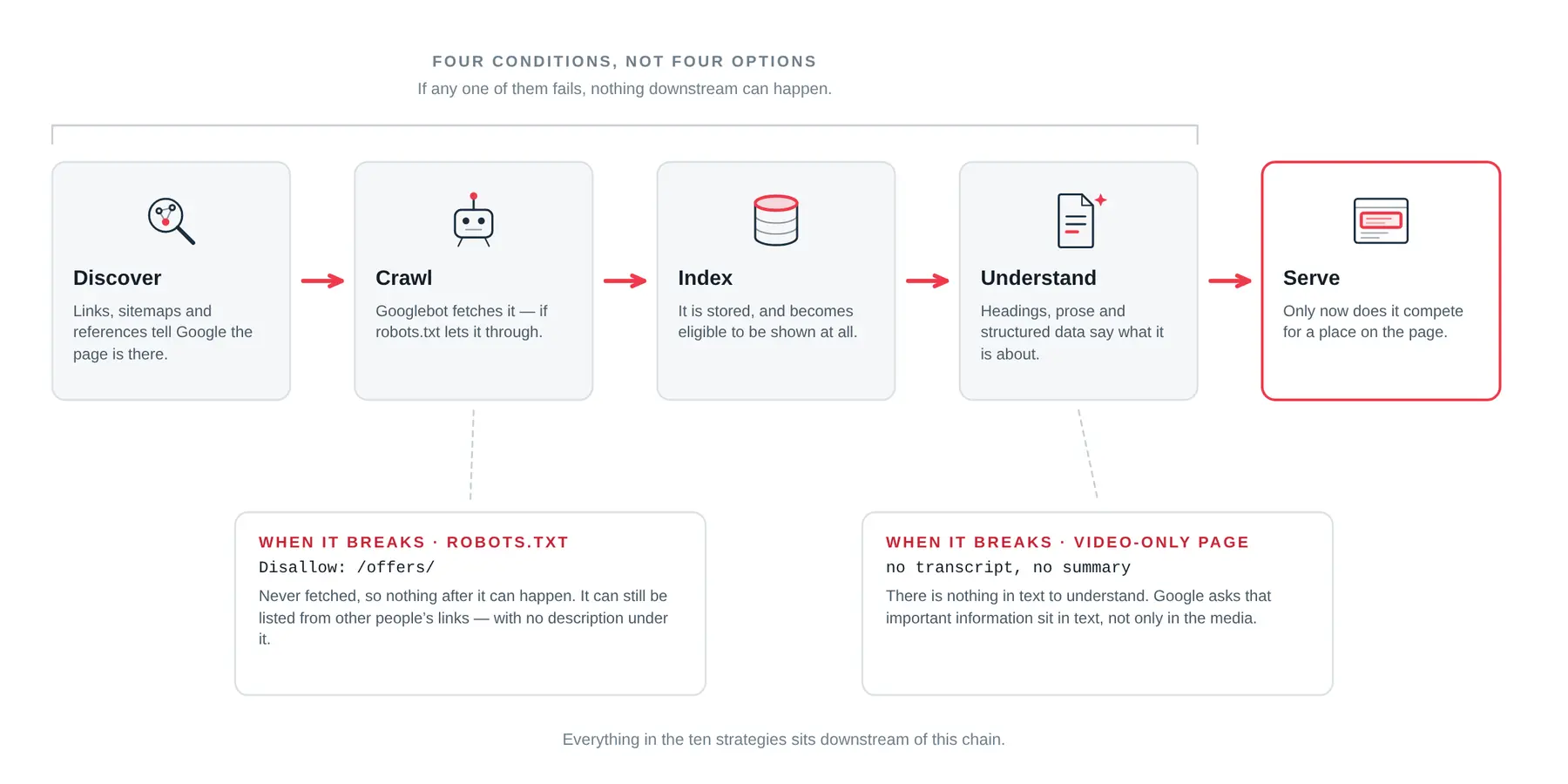
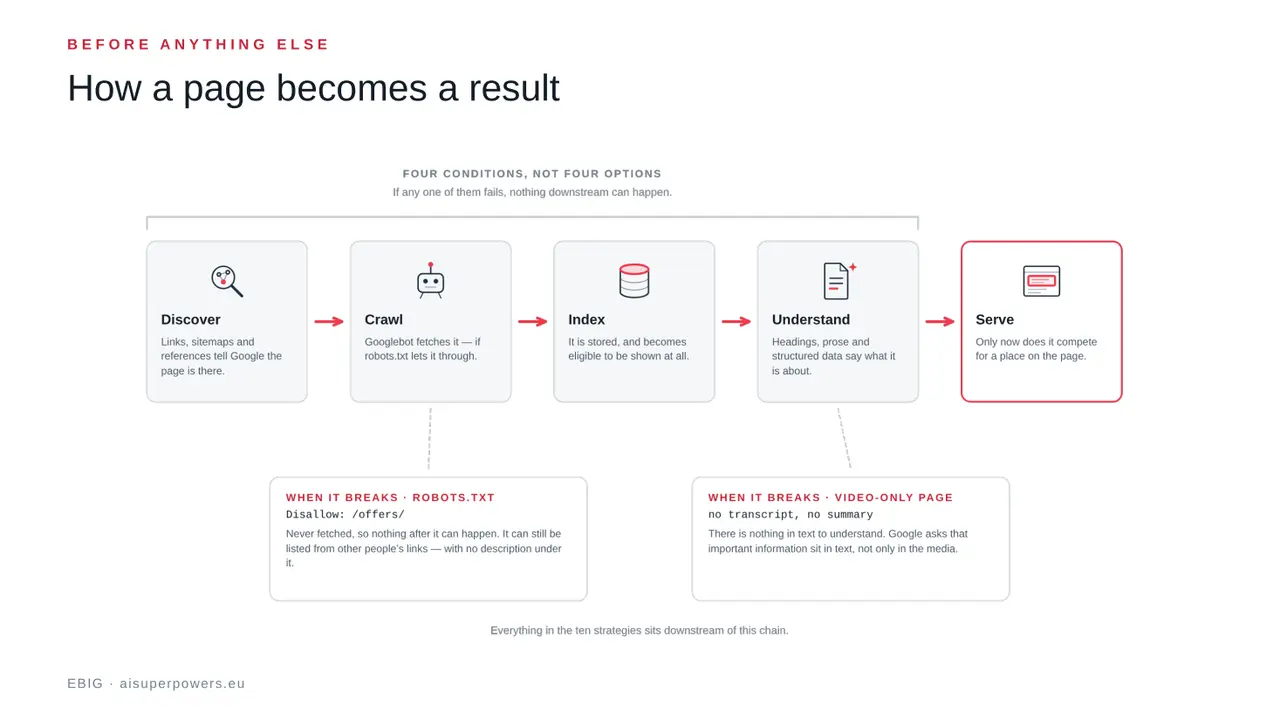
Search engines have to discover, crawl, index and understand a page before anything else can happen to it. Everything further down sits on top of these eight.
 01Discovery before everything
SEO helps engines find, crawl, index and understand your content. That is what creates the opportunity for relevant organic traffic.
 02Research comes first
Market, competitors and the actual result pages. Understand intent, then pick the keywords and topics that match the business.
 03Technical SEO is the floor
Crawlability, indexability, architecture, mobile usability, speed, Core Web Vitals, URLs, sitemaps, robots.txt, canonicals.
 04Content answers a real need
Useful explanation, original insight, reliable evidence. E-E-A-T is a quality framework for judging that work, not a ranking factor.
 05On-page is still plumbing
Clear titles, meta descriptions, headings, descriptive alt text, internal links, organised content.
 06Off-page is earned, not bought
Relevant backlinks and reputation through digital PR and partnerships. Credible coverage beats link volume.
 07AI search runs on the same rails
AEO and GEO name the effort to appear in generated answers. The established principles apply, and inclusion is never guaranteed.
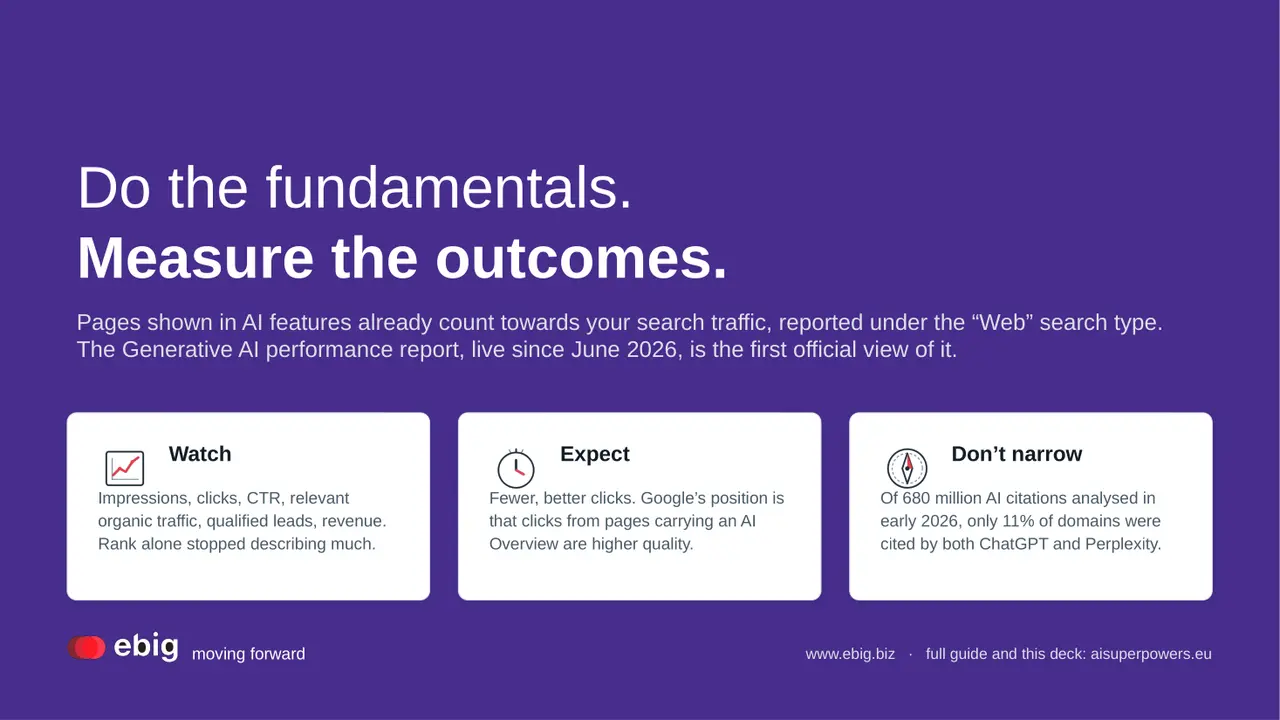
 08Measure outcomes, not vibes
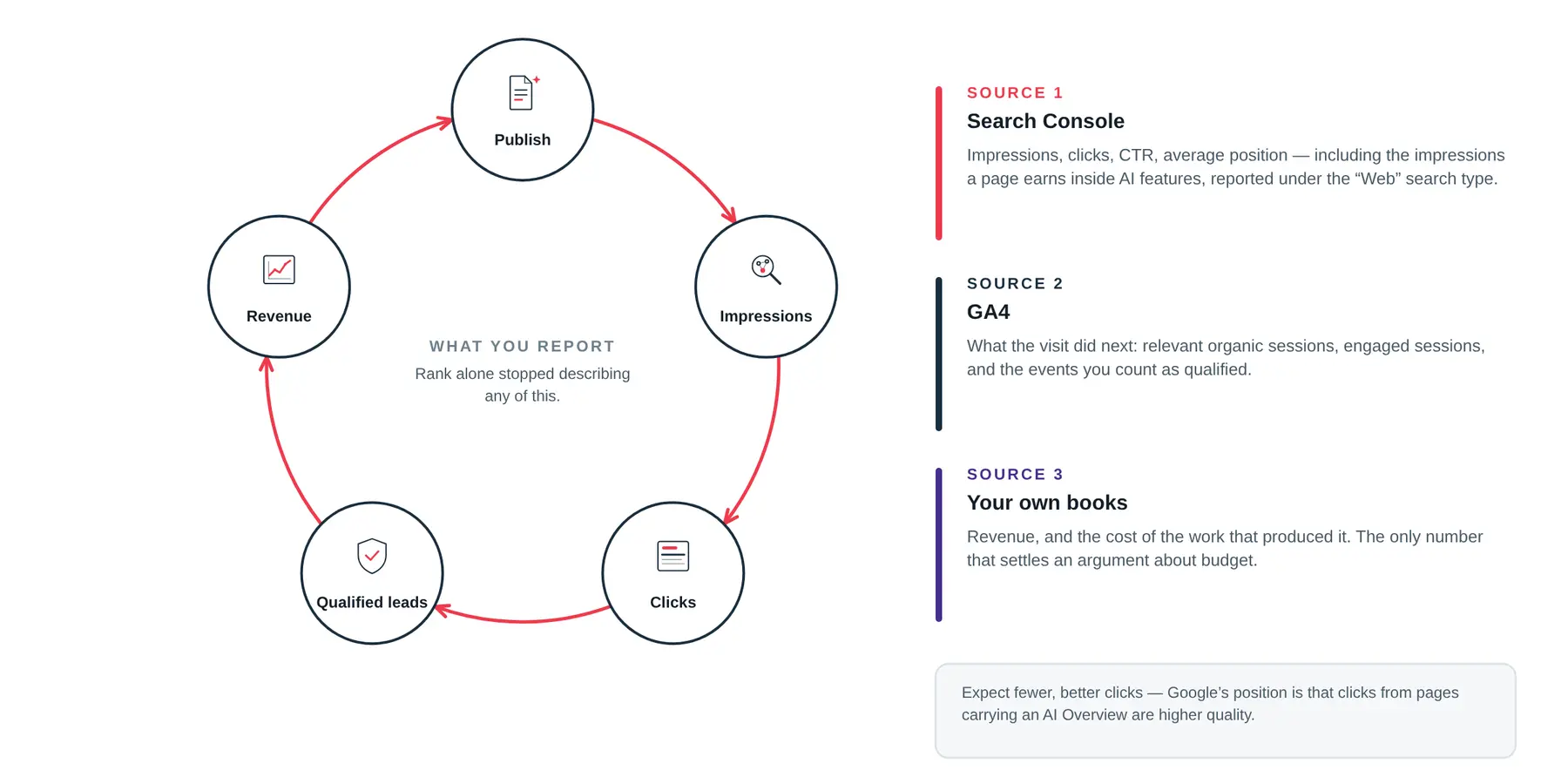
Impressions, clicks, CTR, relevant traffic, qualified leads, revenue. Search Console and GA4 together.
Models for the mechanical parts, a human for anything carrying judgement or first-hand experience.
LEAVE ALONE “AI content” as a category. What the policy targets is pages produced at scale to move rankings, whoever wrote them.
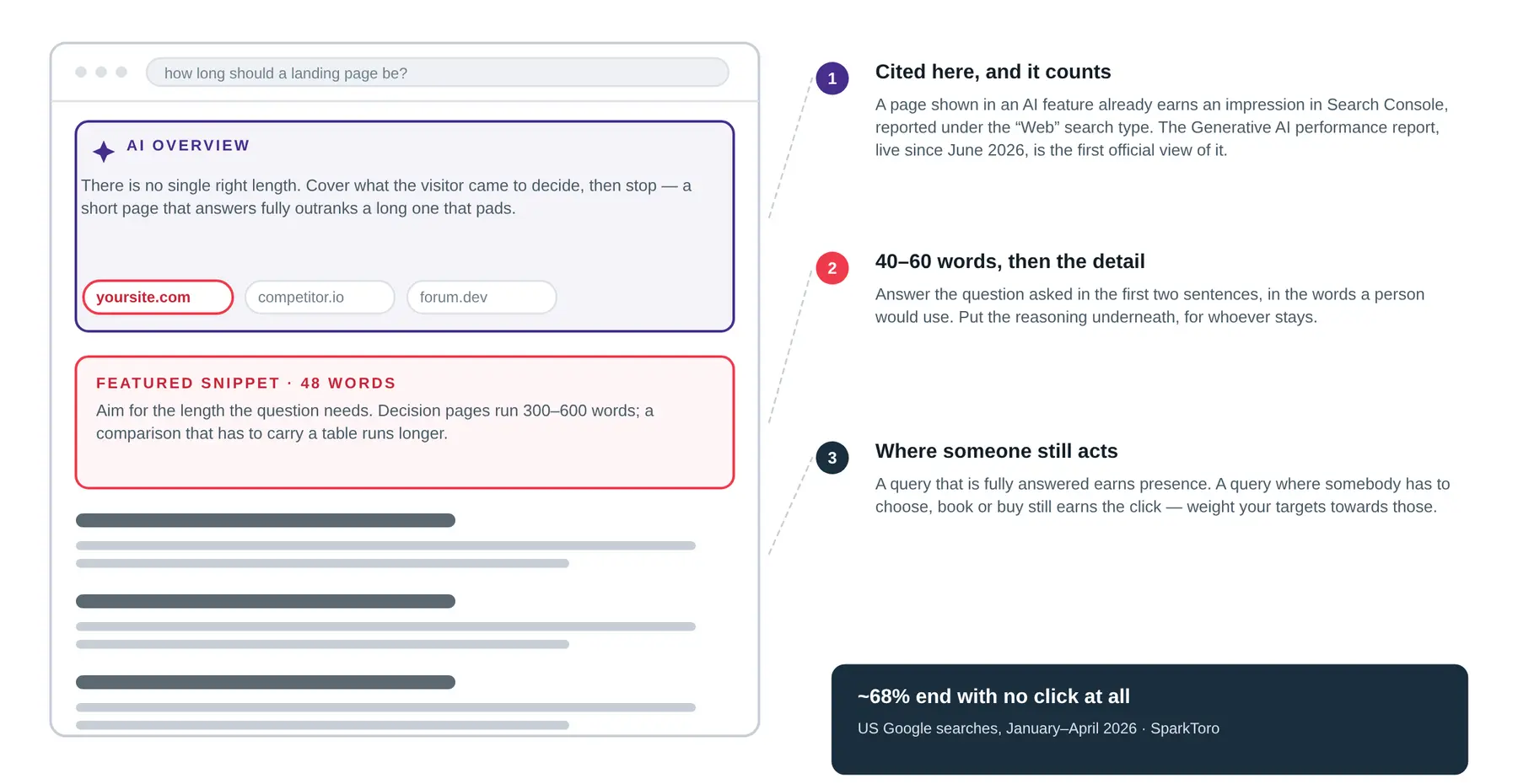
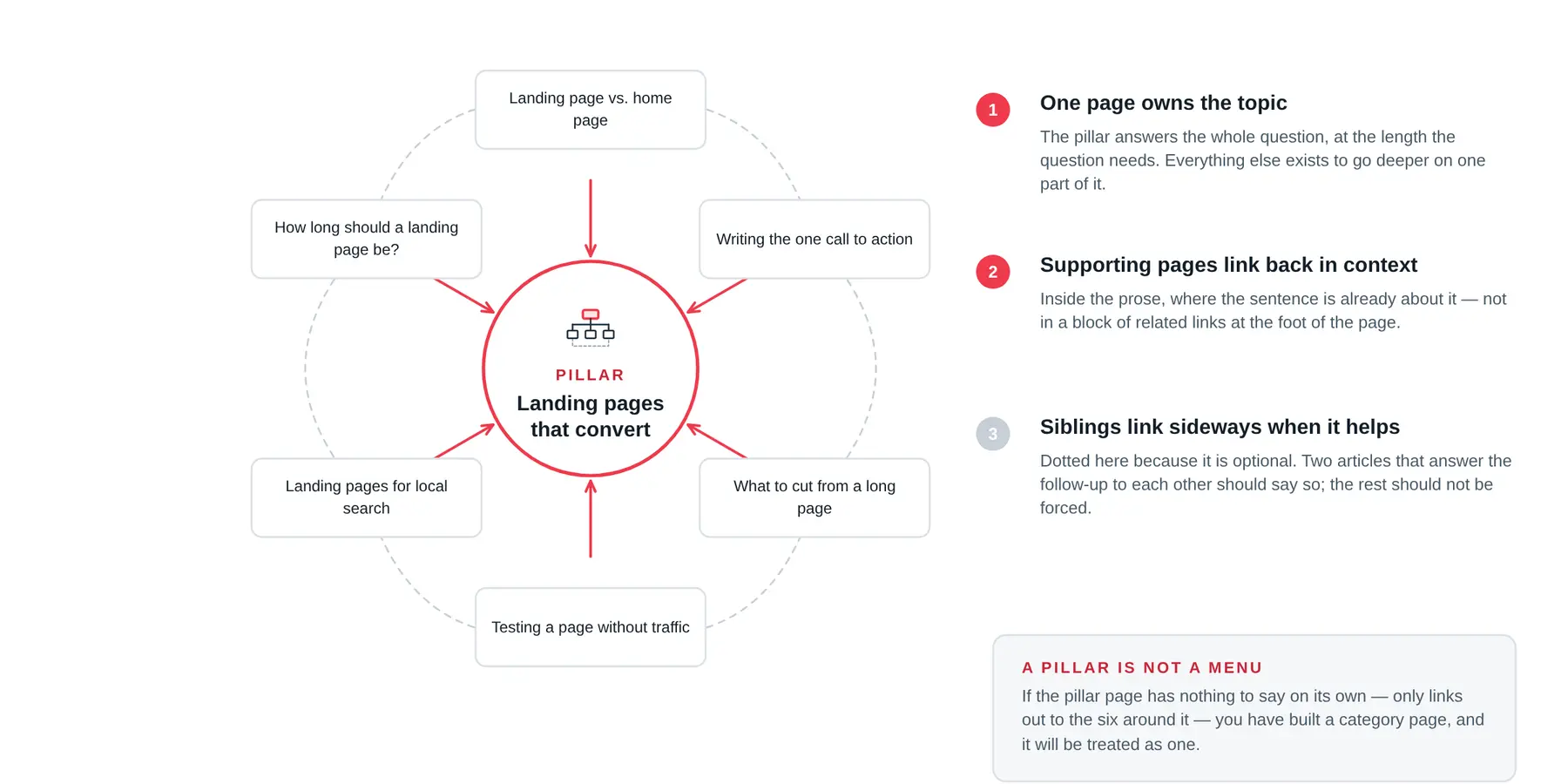
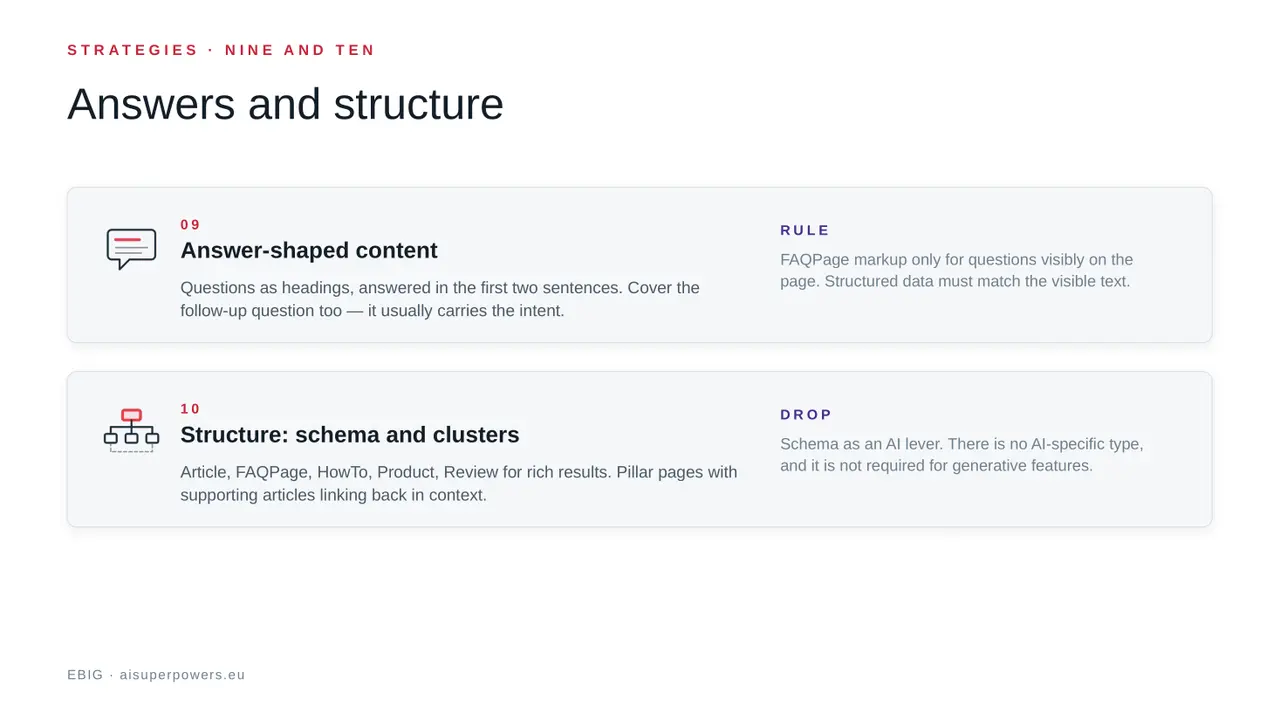
The third and the tenth are the two that get argued about most. Here is what each actually looks like on the page. Click either drawing to enlarge it.
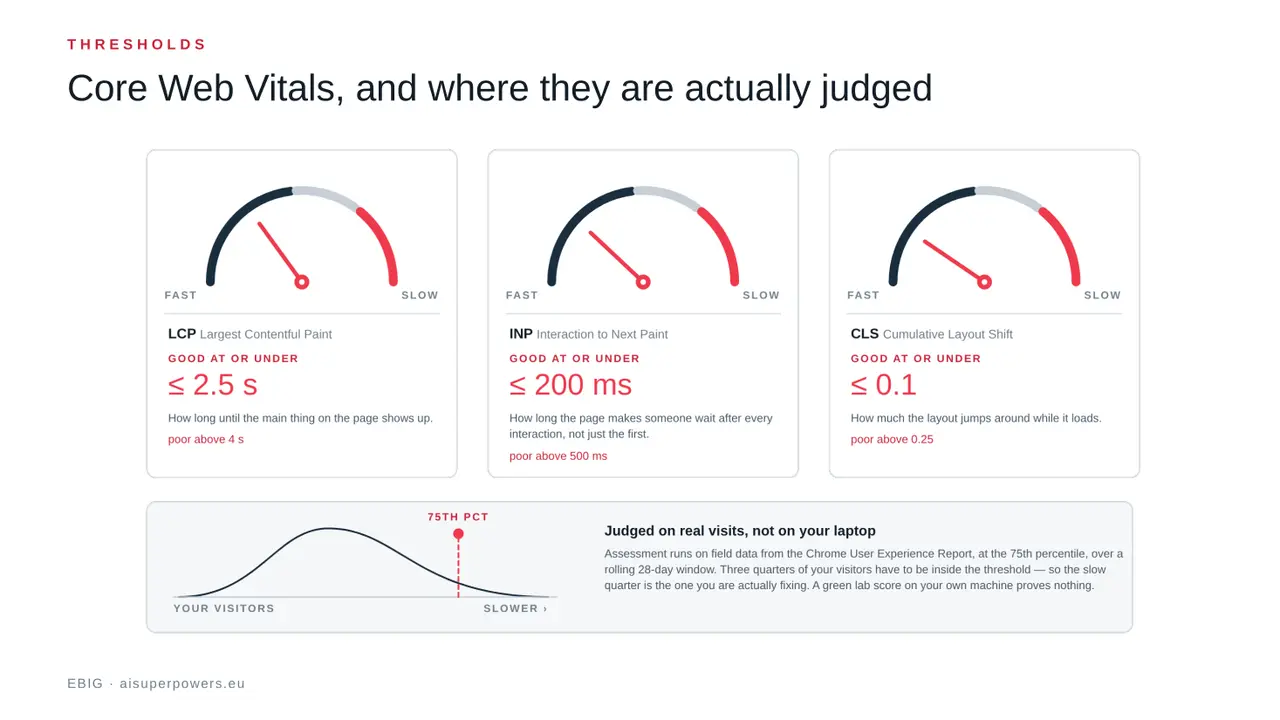
Three metrics, measured on real users from the Chrome User Experience Report, at the 75th percentile, over a rolling 28-day window. Not in a lab.
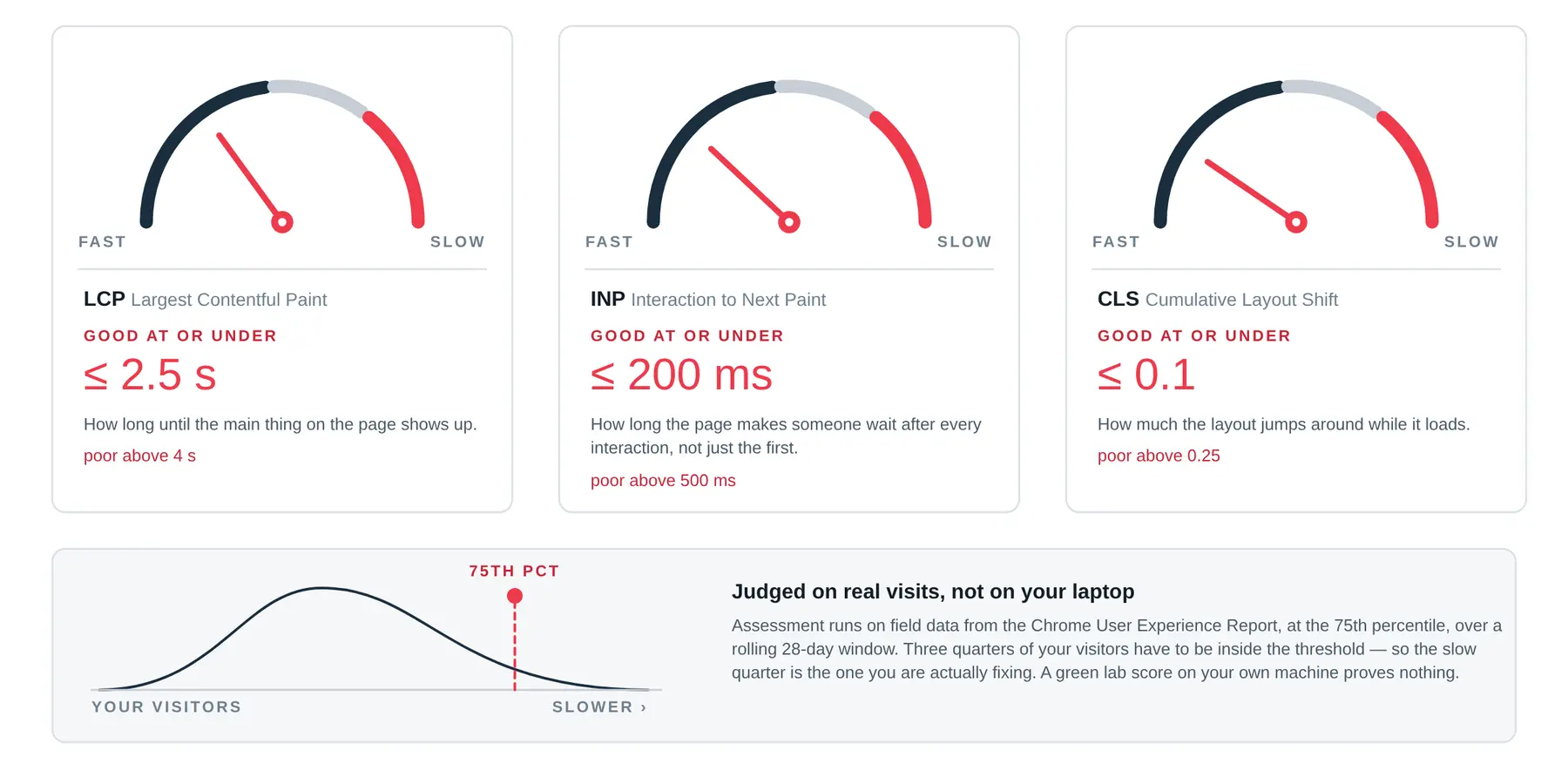
How long until the main thing on the page appears.
How long someone waits after every interaction, not just the first.
How much the layout jumps around while loading.
Each of these is sold as necessary for visibility in generated answers. Google's own documentation says otherwise, in its own words.
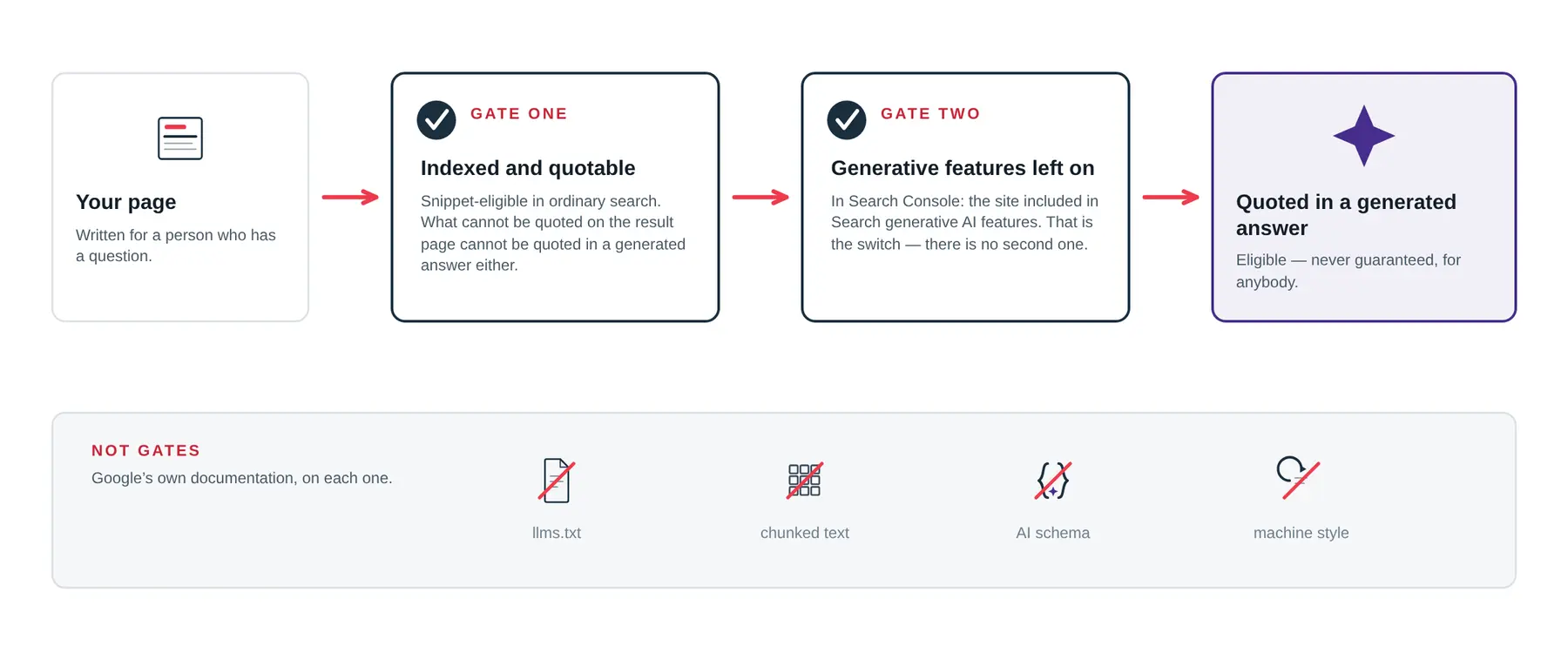
 llms.txt
You don't need new machine-readable files, AI text files, markup or Markdown to appear in Google Search. Making them for other services “will neither harm nor help” you there.
 Chunking content
“There's no requirement to break your content into tiny pieces for AI to better understand it.” Write for a reader; the structure follows from that.
 Special AI schema
“There's no special schema.org markup you need to add.” Structured data still earns rich results, but it “isn't required for generative AI search”.
 Writing for machines
No particular style is needed purely for generative search. Clear headings, sections and honest prose do the job.
 Manufactured mentions
Chasing inauthentic mentions across the web “isn't as helpful as it might seem”. Earned coverage from sources with a reputation to protect is a different thing.
 Perfect code
Semantic HTML helps, but Google says not to “worry about perfect code”. Crawlable, fast and readable is the bar.
Search Console and GA4 answer different questions. Used together, they connect what happened in search to what happened on the site.
Six slides from the presentation. Click any of them to see it full size.
The same content in the two formats people ask for. No email required, no gate.
The whole thing in a form you can print, mark up and hand to a client.
For presenting to a room. Editable, with speaker notes on every slide.
We'll tell you which of the ten above applies to you, and which you can safely ignore. No audit deck, no retainer pitch.
It costs nothing and answers most of it. Come back when you hit the part that is specific to you.
Download the PDF Back to the strategiesPrimary sources first. Where studies disagree, the page says so rather than picking the most dramatic number.